Mostly hotels, resorts, and tourist attractions
- Site any Palaweños whose businesses have made them famous in the economic circles.
Kalui restaurant, this restaurant is one of the most famous restaurants in Puerto princessa, unfortunately I cannot find the name of the owner of kalui
- Did you notice any differences in the way Palaweños behave as sales personnel or in business? Site differences or similarities.
I noticed no difference in their sales personnel compared to manila. They are very similar and have no difference whatsoever.
- As you walked around the markets in the city of Puerto Princesa, how different or similar were their businesses to what you have been accustomed to in Manila or Mandaluyong.
Mostly their businesses served tourists and accustomed to serve tourists unlike Mandaluyong, the businesses in Mandaluyong mainly serves locals.
- Describe the economic needs of the people in the Batak community?
They need more industrialized products like cement, sheet metal, and others. They also need other sources of food like canned goods, rice, and specially a clean source of water. They usually drink water from a well which is not usually clean.
- How are those needs met and which needs if any did you observe that were not met? On what basis have you made your conclusion.
They sometimes go to the city and buy goods, and sometimes foreigners visit them and give them money to take them to pulang bato.
- Are there specific roles that husbands and/or wives play in the family as far as the provision of food or basic needs of the family?
The husband builds the house for the family, and sometimes they climb the mountain to collect raw materials to sell to the city which weighs around 60 kg. The wives usually stay in the house and creates baskets and etc.
- Enumerate things you learned about the people, the families and how they ‘relate’ to others.
The village is very nice and friendly to each other, in the night they gather in a house to watch news together.
- How do they relate to you? Did they keep a daily schedule of activities from waking up to sleeping time?
I’m not sure if they have a daily schedule of the activities but from my observation, they have a daily routine that they follow
- If you were to establish a small business in the area, what nature of business would you establish?
I would setup a farm that mostly focuses on farm animals
- How do you project your business affecting the general way of life of the Bataks?
My business would not affect them that much because they already have mini farms ther and they take care of pigs
- How did this visit affect the way you think, feel and act? In what ways did you ‘help’ the community?
While teaching computer, it was very hard to believe that even the very basics of computer was very hard for them.
- Are there any learnings that have prepared you more for your future work?
Working in that school, I have learned that not everything can be easy, specially in that scenario. I had a hard time adjusting in the schedule, the work, and the people.
]]>12 – ABM
From your Research
- What type of Businesses support the economy of Palawan?
Palawan’s economy is basically agricultural. There are three major crops the palay, corn and coconut. In the mineral resources includes nickel, copper, manganese and chromite. The major industry in Palawan is logging. Palawan has one of the richest fishing grounds in the country. About 45% of Manila’s supply of fish comes from here. Having natural gas reserves of approximately 30,000 trillion cubic feet, the province is the only oil producing province in the country. Tourism is a thriving sector, having received 1.8 million tourists in 2018, a 21% year-over-year increased from 2017. Pearl diving used to be a significant economic activity for Palawan until the advent pf plastics. The world’s largest pearl, the 240 millimeters (9.4 in diameter). Pearl of Lao Tzu, was found off Palawan in 1934. The economic and agricultural business growth of province is at 20% per annum. Coconut, sugar, rice, lumber, and livestock are produced here.
- Site any Palaweños whose businesses have made them famous in the economic circles.
Mr. Bobby and Mrs. Angelita Castro, the couple behind the success of Palawan Pawnshop-Palawan Express Pera Padala (PPS-PEPP). Palawan Pawnshop is now considered to be one of the most reliable, fastest-growing and leading pawnshops in the Philippines. Its first branch was formally opened in Puerto Princesa City on August 17, 1985. Originally established as a business offering only pawn brokering, they have expanded their services to include money remittance known as Palawan Express Pera Padala. Today, after more than 30 years in the industry, they offer to their loyal customers other products and service such as international money remittance, foreign currency exchange, e-loading, bills payment and accident insurance in all their branches in cities, municipalities and remote towns nationwide. The Palawan Pawnshop Service (PPS) group of companies operates the Palawan Pawnshop and Palawan Express Pera Padala chain in the Philippines.
- Did you notice any differences in the way Palaweños behave as sales personnel or in business? Site differences or similarities.
Differences
– They are more accommodating
- They are more discipline
- They always smile and greet you
Similarities
- Hardworking
- Respectful
- Approachable
- Presentable
- As you walked around the markets in the city of Puerto Princesa, how different or similar were their businesses to what you have been accustomed to in Manila or Mandaluyong.
As we walk in the City of Palawan with 1 my co students I don’t see anything different in their market compare to the market here in Mandaluyong because we didn’t stay long in that place and we didn’t go to different market as well. But there are many similarities of their business to the business that I have been accustomed here in Manila. Their markets are the same as the markets here in Manila but of course some products or items that they sell is different to what we have here in Manila but they have a unique product that is only available in their place. We also go to their sidewalk because we have something that we need to buy but we couldn’t find and the price of the product is the same with what we have here in Manila.
From your Observation:
- Describe the economic needs of the people in the Batak community?
The economic needs of the people in the Batak community is the electricity. They don’t have electricity at night so they use flashlight to see what is in their surroundings. Also, the economic needs of the people there is water they don’t have a supply of clean water. They will just drink in the river when they feel thirsty. Also, for me one of the economic needs of the people in the Batak community is food. Although they eat but sometimes those food is not enough to feed all the members of the family.
- How are those needs met and which needs if any did you observe that were not met? On what basis have you made your conclusion.
- I think lack of electricity is being addressed through the use of solar panel. The people rely on solar panel if they don’t have electricity. Some of their need are not met such as food, and clean water, I don’t know why they don’t have water but I think being close to the river is a blessing for them because even if they don’t have clean water they can still drink water from the a river anytime they want.
- Are there specific roles that husband and/or wives play in the family as far as the provision of food or basic needs of the family?
There are specific roles that husband and wives play in the family when it comes on providing food or basic needs for their family. Mostly all the men in the tribe work for their family to sustain their needs while the women are taking care of their children or making handicrafts such as woven items, flower pots, or beaded necklaces and some indigenous items like baskets and necklace and sell it when people come to their place. When I assigned to the family of Ate Marimar, and Kuya Arturo Sapitanan,I had an opportunity to talk and get to know them. The night I come to their place I talked to them and asked question about something and one of the questions that I asked to Kuya Arturo is “what is your job/source of income?” and he said that he goes up to the mountain for several days to get almaciga resin or “bagtik” to sell it outside their village to earn money for his family.This bagtik will be used for varnish. He said that the amount that he earns is around 2,000 in a sack and that’s enough for his family for the whole week. According to Kuya Arturo that his income is not always like that because his income depends on how much of harvest of the almaciga resin or “bagtik” he can get. While Ate Marimar is taking care of her son because her son is too young. They have different roles to play to provide the basic needs of their family, no matter how small or big it is as long as you sustain all the needs and other things for your family.
- Enumerate things you learned about the people, the families and how they ‘relate’ to others. How do they relate to you? Did they keep daily schedule of activities from waking up to sleeping time?
I learned from the people in Batak tribe is to be grateful for what you have no matter how small or large the things that you have, always thank the Lord for all the blessings that He gives to you, always be cheerful and contented to what you have because it is not the material things that satisfy you, only God can satisfy you and give all your needs. Trusting the Lord in this kind of situation is also a lesson that I learned in this trip.
I am grateful that we had an opportunity to meet and to be with one of the families in Batak tribe. I met Ate Marimar and Kuya Arturo because they were the family that assigned to me and eventually, I also met her parents because their house is close to her parent’s house. I was amaze on how welcoming they were to us on their home, even though they didn’t know us well, they welcomed us in their home with a smile on their lips. They were also happy because there are people who are visiting their place and sleep in their house. They were willing to offer you a food without hesitation in their mind, they will ask you what you want or if you are eating this food. They will feed you firs before them.
- If you were to establish a small business in the area, what nature of business would you establish? How do you project your business affecting the general way of life of the Bataks?
- If I were to establish a business in the area, I will establish a handicrafts business. The product that I will put in my handicrafts business are the accessories and indigenous items that they do. This business helps the people in the Batak community to earn money in their own way. They are the people who will be doing the product and then the items that they make will be sold to those people who will be going there in there place and then some items such as baskets and necklace will be sent to other places for profit and to be able to show to other people their talents that they can make those items even if they are in the mountain.
- How did this visit affect the way you think, feel and act? In what ways did you ‘help’ the community? Are there any learnings that have prepared you more for your future work?
This visit that happened last March 9–14, 2020 on Sitio Kalakwasan Puerto Princesa, Palawan at Heaven’s Eye Tribal Mission Academy (HETMA) is a blessing to me. This Palawan immersion was not our/my plan but God truly works in ways that is unexpected. Even though our trip to Thailand was canceled but in God’s provision He allowed us to continue our Cultural Immersion in Palawan. I know that God has a purpose why He did not allow us to go to Thailand because He has a bigger and better plan for us in Palawan.Even though this was not an out of the country immersion it was very different from what we are all used to. I never thought that this visit will have a huge impact on my life. They gave me a different perspective and it helped me to broaden my thinking on life. This visit also made me realize to appreciate all the things that I have and be grateful for what I have because the people in Batak tribe they showed us contentment and genuine happiness that only God can fulfill. This visit helped me become more mature and responsible for my actions towards other people. I learned to adapt to a different culture and to adjust in a different environment because each member was required to really adjust to the culture and traditions of the tribe that we are going to. I was amaze on how God works on the lives of the teachers of HETMA, they inspired me to serve more people just like what they are doing. I really want to help and serve other people especially when you know that the things you do will bear fruit in the future, all the efforts you put on it will be worth it. I learned to be open to new ideas or changes, deal with situations, work independently or being part of a team.
- As a student who visit to their place, I think the only way to helped the Batak tribe is to share my abilities to them by teaching and helping them in their studies and other stuff like proper hygiene and the basic use of computer. And also, when we go the family that we are assigned, we gave them a food for their family for them to eat although it is a simple token, I think that’s a big help for them.
- I learned many things that I knew would help and prepared me for my future work one of these is to socialize with other people especially the kids in Batak tribe were very shy so we really needed to approach and build relationships with them. At first, I didn’t know how to approach them properly so they wouldn’t be shy and feel that we are different from them but as the days went by, I learned to approach, interact, play and build relationships with them. Another thing that I learned from this trip is that there are many people you may encounter in your life who have a different personalities, attitudes and beliefs but the only thing you need to do is to respect them especially if they are older than you and also the younger people, accept their opinions and love who they are because we are different in our own unique ways. If you want others to respect and love you, you must do the same thing to them. It will also help me in my future work or career path that I will pursue because this experience has taught me something that I cannot learn in academic or with anyone else. This experience has helped me to have a different perspective on life and I will treasure everything I’ve learned from this experience. As an ABM student I think what I’ve learned in this trip will have a great influence on me and prepare me to become a better person when I work in the future.
https://en.wikipedia.org/wiki/Palawan#Economy
https://www.palawanpawnshop.com/about

https://www.rappler.com/move-ph/14349-mountain-people-the-bataks-of-palawan
]]>From your RESEARCH:
Palawan was inhabited by the Tagbanua, Palaw’an, Tau’t bato and the Bataks. The Tagbanua tribes of Palawan are commonly found in the central and northern part of the province. They are known for their belief in deities that for them can be found on their surroundings. The Palaw’an tribes of Palawan on the other hand can be found in the southern part of the province. The tribe of Palaw’an is also known to be a tribe of nomads they are known to look for lands that they can harvest and benefit from and then they move on to other places. The Tau’t Bato tribes of Palawan they are also found on the southern part of the province. They are mainly described as the “People of the Rock” they live on craters and caves that are characterized by the abundance of rocks that gave them their description.
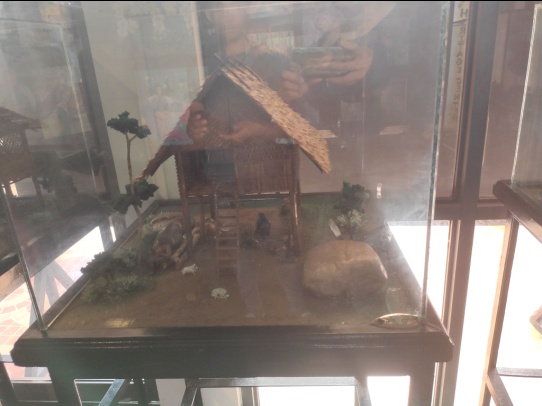
The Batak tribe of Palawan is the tribe that we were tasked to be immersed with. Their tribes are can be found on the northeast part of the province. They dwell on places that are close to nature and they are characterized as peaceful and shy. The Batak tribe is also known to be hunters. Since their dwelling places are in the mountains they are not used to buying for their food or their survival they hunt animals that are in their trees, rivers, and hills. They are also known to harvest the “Bagtik” that can be found on trees and honey from Bees.
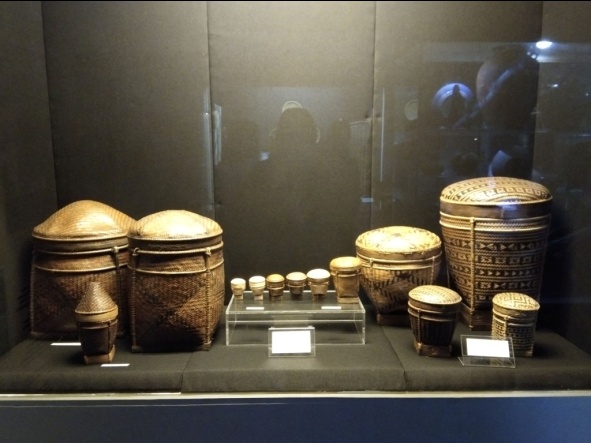
The Batak people that we encountered in HETMA were very welcoming but still very withdrawn at first. They are true to their culture and you can still observe how they practice their traditions. One of the things that you can observe about their distinct culture is in the way the women in their tribe dress. The Batak tribe is truly a tribe that is rich in traditions and cultures that are very unique in my point of view. As a city dweller I saw how true the tribe was in preserving their identity as the Batak. It was awesome to see how the complexity of their rich culture and history can be seen in the simplicity of how they live their lives.
From your EXPERIENCE:
I stayed in the house of Kuya Japson and Ate Cyril. While I was there I had the opportunity to be able to talk and to live with them for one day. They were very welcoming and open to what I can offer to them. I really wanted to find a connection with them so that I can know them better. When I asked them about their culture and their traditions they were very open to discuss to me their experiences. Kuya Japson was working in the forest wherein they get what they call “Bagtik”. The harvesting of “Bagtik” is the tribe’s main source of income. It has been part of their culture since the beginning.
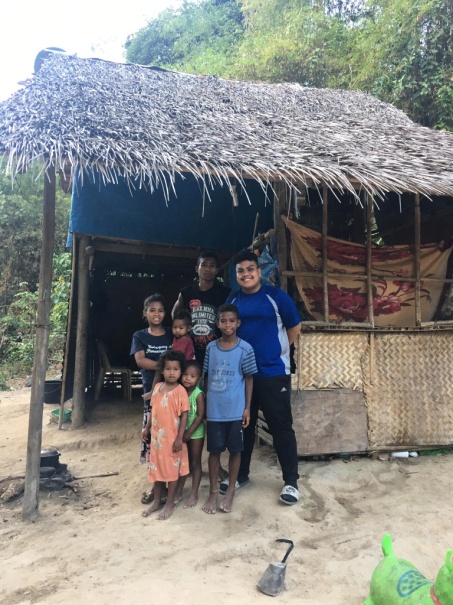
Since their living area is located in the mountains their surroundings gave them the resources that they needed to survive. They also hunt for their food. Even as children they are thought to hunt squirrels and other small animals that they can eat. I saw this when I was given a chance to live with them. They were hunting for their food in the morning and also in the night. They made small slingshots and makeshift guns that fires marbles so that they can reach animal even if it was long range.
They lived in houses that are on stilts and are made of materials that can be found in their surroundings. The particular house that I was assigned to was a little bit modern because Kuya Japson designed it and built it himself. Their family was one of the families in the tribe that had a Television. Ate Cyril was the daughter of the Pastor in their tribe. Their tribe is very social and close with each other. The school really helped to bring the students and the families together. They like to be in the company of each other like other provinces in the Philippines but they are not used to interacting with outsiders that much. They are very shy because of the discrimination that they have experienced. When we were talking when I was staying with Kuya Japson and Ate Cyril they told me a story when they were young when they tried to study in the city but because of the discrimination that they received from the people they were forced to just stay in their tribe and to stop their education.
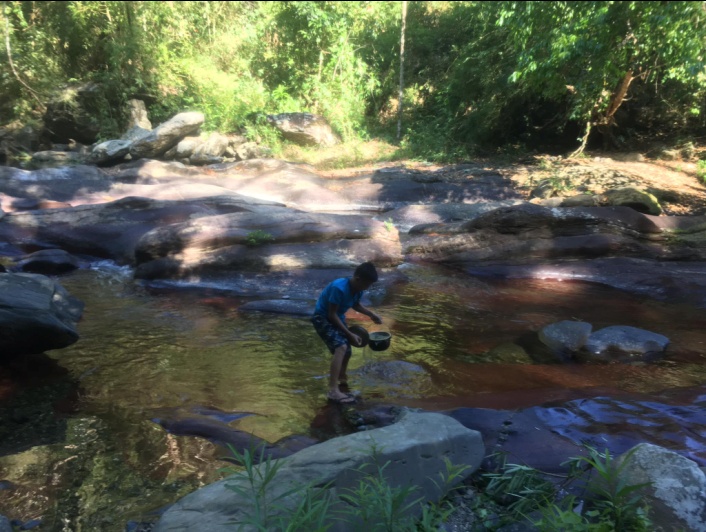
It was not hard for me to connect with them on a personal level because when I arrived in their house I saw thaw they were watching basketball and I immediately took that opportunity to find our common ground wherein we can relate to each other. Another common ground that we had was when they told me that Ate Cyril was a Pastor’s kid. For me personally it was not difficult to communicate with them because they really welcomed me and they wanted to help me learn more about their culture. The daily routines of the families are mostly about working and studying. They were really hard workers and since their children were still young they brought their children whenever they needed to work in the mountains.
I learned a lot about their culture when I was with them for our immersion. I learned about how they live and how they survive. I witnessed how they hunted and worked for their food. We also saw them when they were going to the mountains to harvest their “Bagtik”. They also told me about the difference between the way they find love in their tribe and how the new generations have changed even in their tribe. I saw how determined they were to provide for their families and I witnessed and experienced their hospitality as they welcomed me to be a part of their family for a day.
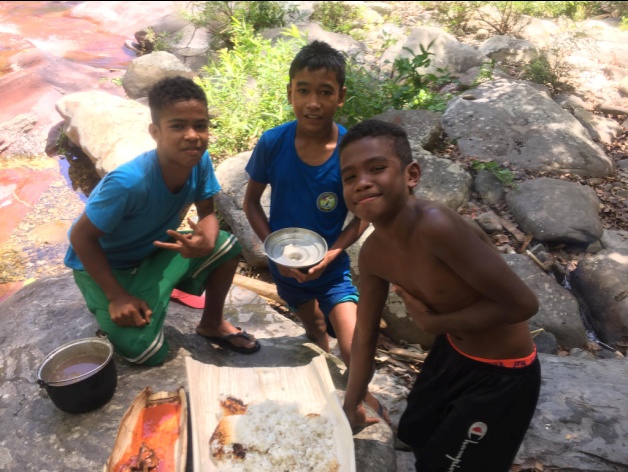
The HETMA is the academy that was founded by Dr. Wealthy Villanueva 7 years ago. They started to bring the school to the Batak tribe along with the Gospel. They wanted to bring quality education to the people because it is hard for the people to have proper education because of their living situations. She was challenged to create the school when she was a part of a group that went on a mission trip to the Batak tribe and a member once said that why were they given school supplies even if they had no use of it. She held that burden and that burden turned into the HETMA that we know now. It has affected the tribe in a lot of ways. The academy helped the tribe to increase their level of education. They have also helped the tribe as they teach the word of God to the children. They have molded the community to be Christ centered and it has blessed the community abundantly.
This Palawan immersion was not part of my personal plan. I was ready to go to Thailand because for me that was a place full of new things and comfort. But God works in ways that is unexpected. It was not my plan that will prevail but His. This trip changed my perception towards my contentment. I was rebuked as I observe how life and how God can fill you with joy that cannot be matched by anything of this world. God showed me how He worked through the lives of the staff and all the people that we have interacted with. The experience changed me and it gave me a refresh on how God is awesome and how sovereign He is.